
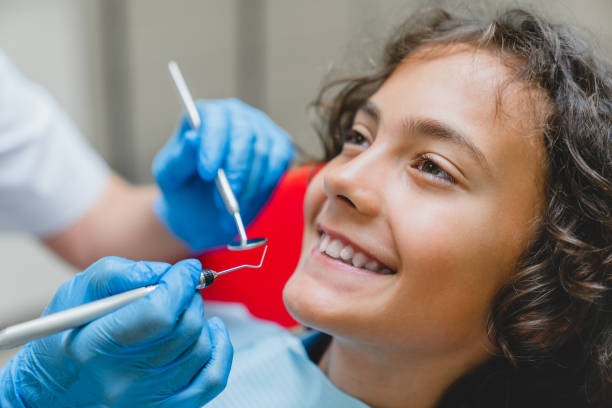
Many parents assume that children must lose all their baby teeth before they can get braces. However, that is not always the case. In certain situations, an orthodontist may recommend treatment while a child still has some primary teeth. The decision depends on the child’s dental development, bite alignment, jaw growth, and specific orthodontic concerns.
Early orthodontic treatment, sometimes called Phase 1 treatment, can help address certain problems before all permanent teeth have erupted. It does not mean every child with baby teeth needs braces. In many cases, monitoring dental development and waiting for more permanent teeth to appear is the most appropriate approach.
Understanding when treatment may be useful can help parents make informed decisions about their child’s oral health. An orthodontic evaluation can identify developing concerns and determine whether early intervention, regular monitoring, or treatment at a later age is recommended.
1. Can Children Get Braces While They Still Have Baby Teeth?
Yes, children can sometimes receive braces while they still have baby teeth. Orthodontic treatment does not always require every primary tooth to be replaced by a permanent tooth.
However, orthodontists don’t automatically recommend traditional braces for young children. Orthodontists consider the child’s dental age, jaw development, tooth eruption pattern, and the type of alignment problem before suggesting treatment.
For example, a child may have a developing crossbite, significant crowding, or a jaw-growth concern that could benefit from early intervention. In these situations, an orthodontist may recommend a limited course of treatment to address a specific issue.
Other children may have crooked baby teeth but no underlying problem that requires immediate correction. Since primary teeth naturally fall out and permanent teeth continue to develop, treating every visible alignment issue too early may be unnecessary.
Treatment decisions should be based on the child’s overall oral development rather than simply whether baby teeth are present.
2. What Is Phase 1 Orthodontic Treatment?
Phase 1 orthodontic treatment, also known as interceptive orthodontics, takes place while a child still has a mixture of baby teeth and permanent teeth. It is generally considered when a developing orthodontic problem may benefit from being addressed before the permanent teeth have fully erupted.
The purpose is not necessarily to create a perfectly aligned smile at a young age. Instead, early treatment focuses on managing specific concerns involving tooth position, jaw relationships, and the development of the bite.
Depending on the child’s needs, treatment may involve braces, expanders, or other orthodontic appliances.
Want to understand your child’s orthodontic options? Visit the practice’s official Contact page to learn about its team, request an evaluation, and discuss a treatment plan suited to your child’s dental development.
3. When Is Early Orthodontic Treatment Recommended?
Early treatment is usually considered when an orthodontist identifies a developing problem that may be easier to manage while a child is still growing. The goal is to address a specific concern, not simply to straighten every tooth as early as possible.
Some situations that may justify an early evaluation include:
- Crossbite: One or more upper teeth bite inside the lower teeth, which can affect how the jaws fit together.
- Severe crowding: There may not be enough space for permanent teeth to erupt into suitable positions.
- Protruding front teeth: Upper front teeth may extend significantly forward, increasing their vulnerability to injury.
- Open bite: The upper and lower front teeth do not meet when the back teeth are together.
- Jaw growth concerns: The relationship between the upper and lower jaws may be developing in a way that warrants monitoring or intervention.
- Early or delayed tooth loss: Losing a baby tooth too soon, or retaining one longer than expected, can sometimes affect the space available for permanent teeth.
The American Academy of Pediatric Dentistry emphasizes that treatment timing should be based on an individual assessment of dental development, bite relationships, and the specific problem being addressed.
4. What Types of Braces or Appliances Can Be Used?
The most suitable treatment depends on the child’s age, dental development, and orthodontic needs. Traditional braces are one option, but they are not the only approach.
Traditional Braces
Traditional braces use brackets attached to teeth and a wire that applies controlled pressure to guide tooth movement. In selected early-treatment cases, braces may be placed on certain permanent teeth while baby teeth are still present.
The orthodontist must consider which teeth are suitable for brackets and how the planned movement will interact with the natural loss of primary teeth.
Palatal Expanders
A palatal expander is an appliance used in certain cases to widen the upper dental arch. It may be recommended when the upper jaw is narrow or when a crossbite needs to be addressed.
Expansion is not appropriate for every child. The orthodontist for adults evaluates the bite and growth pattern before recommending it.
Removable Appliances
Some children may benefit from removable appliances designed for a specific orthodontic purpose. These devices must be worn according to instructions to work effectively. A child’s ability to follow the wear schedule is therefore an important consideration.
Space Maintainers
If a baby tooth is lost earlier than expected, a space maintainer may sometimes be recommended to preserve room for the permanent tooth. This is not the same as braces, but it can play an important role in managing dental development.
The orthodontist will explain which appliance, if any, is appropriate and how it fits into the child’s longer-term treatment plan.
5. Does a Child Need to Lose All Baby Teeth Before Braces?
No. There is no universal rule requiring all baby teeth to fall out before orthodontic treatment can begin. Children normally move through a mixed-dentition stage, when primary and permanent teeth are present at the same time.
This stage commonly occurs during the elementary-school years, although the timing varies from child to child. An orthodontist considers which permanent teeth have erupted, which baby teeth remain, and how the bite is developing.
In some cases, starting treatment before all baby teeth are gone may help address a particular problem. In others, waiting allows more permanent teeth to erupt and makes comprehensive treatment more predictable.
Parents should not try to speed up the process by having healthy baby teeth removed simply to make room for braces. Extractions should only be recommended when there is a clear clinical reason and a carefully planned approach.
If your child has crowding, an unusual bite, or baby teeth that are not falling out as expected, arrange an orthodontic assessment. A professional evaluation can clarify whether early treatment is beneficial or whether monitoring is the better option.
6. What Age Should a Child First Visit an Orthodontist?
The American Association of Orthodontists recommends that children have their first orthodontic check-up by age seven, or earlier if a concern is noticed. This does not mean every seven-year-old needs braces. The purpose is to identify developing issues and decide whether treatment is needed immediately, later, or not at all.
American Association of Orthodontists+1
At this age, an orthodontist can often evaluate the relationship between the jaws, the position of erupted permanent teeth, and the space available for teeth that have not yet appeared.
If no treatment is needed, the orthodontist may recommend periodic check-ups to monitor development. This approach helps avoid unnecessary treatment while ensuring that a developing concern is not overlooked.
Parents can also ask their child’s general dentist to share relevant dental records or observations with the orthodontist. Coordinated care can help create a clearer picture of the child’s oral development.
7. What Happens During an Early Orthodontic Consultation?
An initial consultation generally involves reviewing the child’s dental and medical history, examining the teeth and bite, and assessing jaw development.
Depending on the situation, the orthodontist may recommend photographs, dental impressions or digital scans, and X-rays when clinically appropriate. These records help evaluate tooth positions, eruption patterns, and the relationship between the jaws.
The orthodontist should explain:
- Whether an orthodontic problem is present.
- Whether treatment is recommended now or later.
- Which treatment options are available.
- How long the proposed treatment may take.
- Whether a second phase of treatment may be needed.
- The estimated costs and payment arrangements.
Parents should feel comfortable asking questions and discussing any concerns. A good treatment plan should be understandable and tailored to the child’s needs.
8. Will a Child Need Braces Again When All Permanent Teeth Come In?
Some children who receive early orthodontic treatment may need a second phase later, while others may not. Phase 1 treatment is often intended to address a specific developmental concern rather than complete every stage of tooth alignment.
Phase 2 treatment, when recommended, generally takes place after more permanent teeth have erupted. It may involve comprehensive braces or another suitable orthodontic approach to refine alignment and bite relationships.
This possibility should be discussed before early treatment begins. Ask the orthodontist what Phase 1 is expected to accomplish and what additional treatment may be needed in the future.
It is also reasonable to ask how progress will be monitored between phases. Some children enter an observation period after early treatment, allowing the remaining permanent teeth to erupt before the next decision is made.
9. Are Clear Aligners an Option for Children With Baby Teeth?
Clear aligners may be suitable for some older children and teenagers, but they are not automatically appropriate for a child who still has many baby teeth.
Treatment depends on the type of orthodontic problem, the number and position of erupted permanent teeth, and the child’s ability to wear and care for the aligners as directed. Certain bite or jaw concerns may require a different appliance or treatment approach.
Families researching Invisalign Logan, Utah, should ask providers whether aligner treatment is suitable for the child’s particular stage of dental development. The most appropriate option is the one that addresses the clinical concern safely and effectively, not necessarily the most popular one.
Conclusion: Get the Right Advice at the Right Time
Yes, children can sometimes get braces while they still have baby teeth. Early orthodontic treatment may be useful for specific concerns involving crowding, crossbites, jaw development, or the eruption of permanent teeth. However, not every child needs early treatment, and waiting may be the better choice in many situations.
The best next step is an orthodontic evaluation that considers your child’s dental development, bite, and individual needs. A professional can explain whether treatment should begin now, be postponed, or simply be monitored as permanent teeth emerge.
Frequently Asked Questions
1. Can a 7-year-old child get braces with baby teeth?
Yes, a 7-year-old child can sometimes get braces while still having baby teeth. An orthodontist may recommend early treatment if the child has significant crowding, a crossbite, or jaw-development concerns. However, not every child needs braces at this age.
2. Do braces affect the natural loss of baby teeth?
Braces do not necessarily prevent baby teeth from falling out naturally. However, orthodontists consider the timing of tooth loss when planning treatment because loose or soon-to-be-lost teeth can affect bracket placement and tooth movement.
3. How long does Phase 1 orthodontic treatment take?
Phase 1 orthodontic treatment commonly takes around 9 to 18 months, depending on the child’s dental development and the orthodontic problem being treated. The orthodontist will provide an estimated timeline based on the individual treatment plan.
4. Is early orthodontic treatment necessary for every child?
No, early orthodontic treatment is not necessary for every child. Some children benefit from intervention while their jaws are developing, while others only need regular monitoring until more permanent teeth erupt. Treatment depends on individual orthodontic needs.
5. Can children use Invisalign while they still have baby teeth?
Some children with a mixture of baby and permanent teeth may be candidates for clear aligners. However, suitability depends on dental development, the type of bite problem, and the child’s ability to wear aligners consistently. An orthodontist can determine the most appropriate option.
6. What are the signs that a child may need early orthodontic treatment?
Common signs include severe crowding, crossbite, protruding front teeth, open bite, difficulty chewing, and unusual jaw alignment. Early or delayed loss of baby teeth may also require evaluation. An orthodontic consultation can help determine whether treatment or monitoring is needed.